
What Is the Best Sales Funnel Strategy? (Step-by-Step Guide)
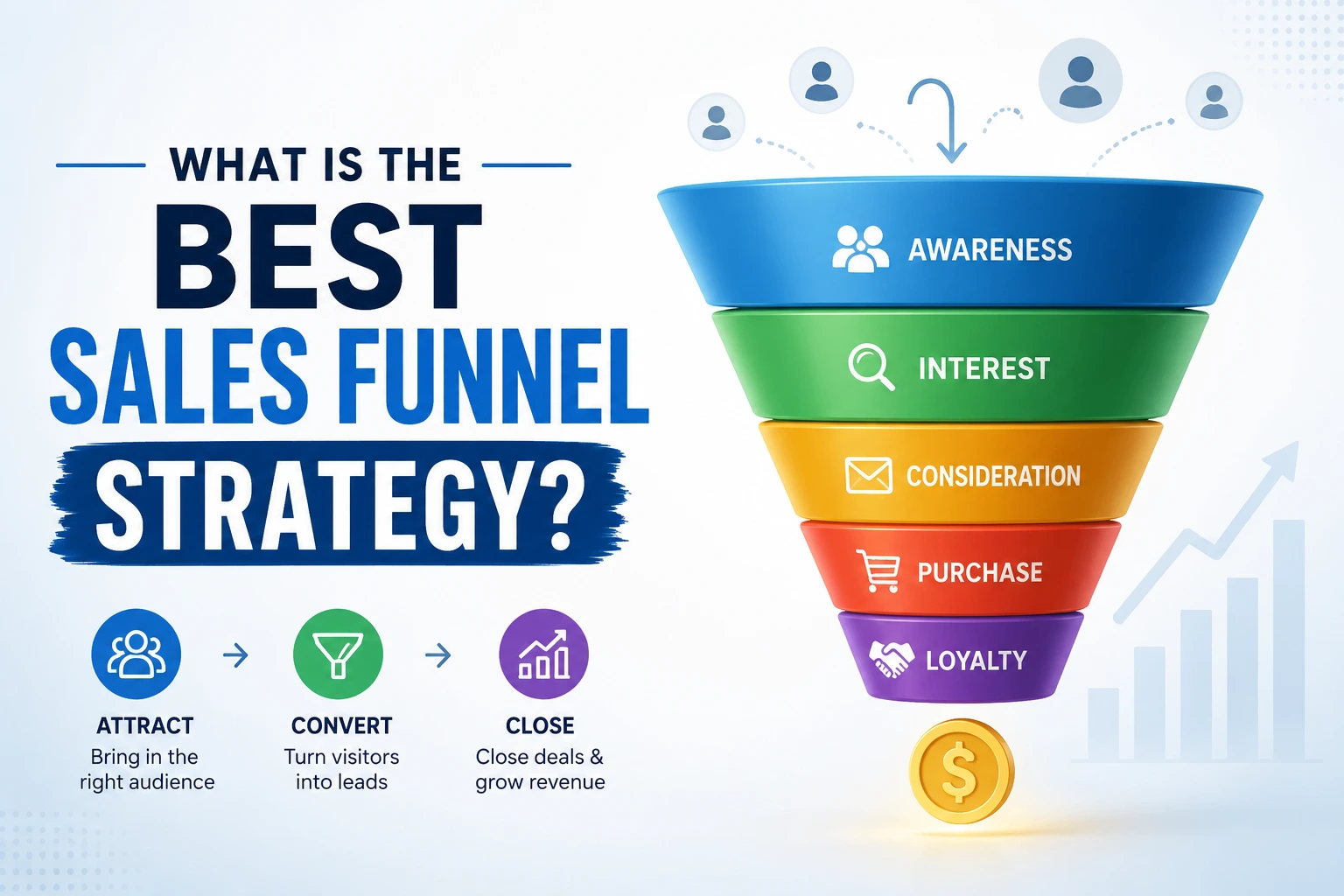
⚡ Quick Answer
The best funnel strategy matches your offer’s price to the right funnel type. Low-ticket offers do best with a tripwire funnel. High-ticket offers do best with a webinar or application funnel. Most funnels fail from weak follow-up, not bad design.
What decides your best funnel type
- Price point: Under $100 favors tripwire funnels; over $1,000 favors webinar funnels.
- Buyer awareness: Cold traffic needs education first, not a hard pitch.
- Sales cycle: Simple products convert fast; complex ones need nurture funnels.
Mistakes that kill funnel results
-
✓
Sending cold traffic straight to a sales page -
✓
No follow-up emails for people who don’t buy -
✓
Copying a funnel template without testing it
What Is the Best Funnel Strategy? A Clear Guide by Ashraful
You launch a funnel. Traffic flows in. But sales don’t follow.
That’s the moment most marketers, myself included as Ashraful, learn a hard lesson. There’s no single “best” funnel. There’s only the best funnel for your offer, your price, and your buyer.
A sales funnel guides a stranger from first click to paying customer. Get the match wrong and even great traffic won’t convert. Get it right, and the same traffic turns into real revenue.
Below, you’ll find the exact funnel types that work, how to pick yours, and the fixes that stop leaks fast.
📌 Key Takeaways
-
→
Tripwire funnels work best for offers under $100. -
→
Webinar funnels fit high-ticket offers that need trust first. -
→
Average funnel conversion sits around 3% to 5% across industries. -
→
Follow-up sequences recover most of the sales a funnel would otherwise lose. -
→
Businesses with a documented funnel report far higher ROI than those without one.
What Makes a Funnel Strategy “Best” for Your Business?
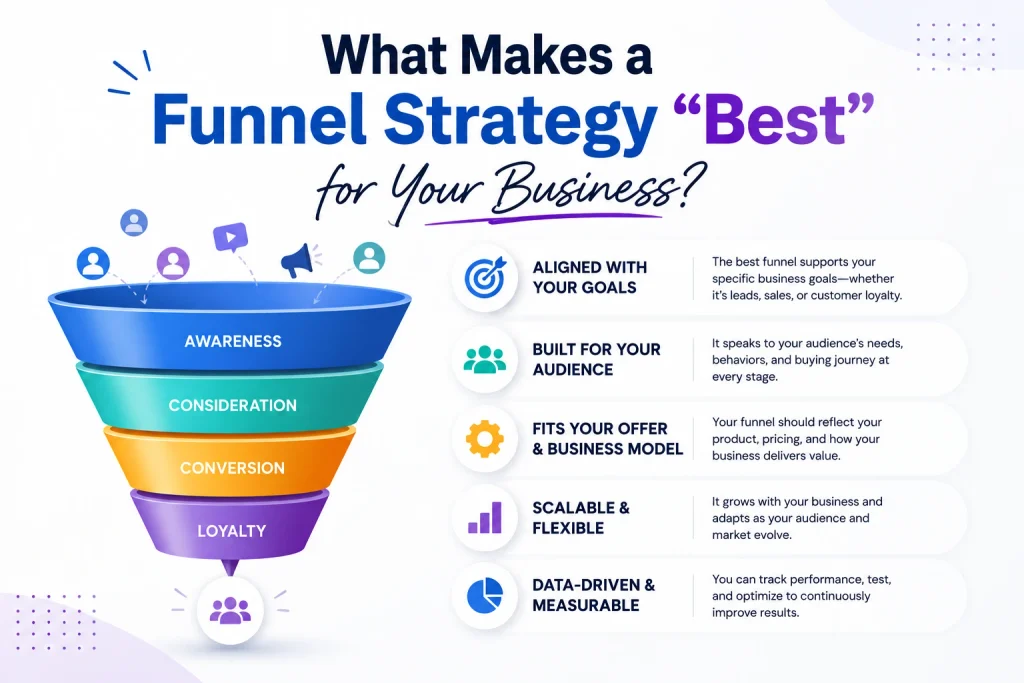
The best funnel strategy is the one that fits your offer’s price and your buyer’s trust level. There’s no single funnel that wins for everyone.
A $20 e-book and a $5,000 coaching program can’t use the same path. The e-book buyer decides in seconds. The coaching buyer needs proof, trust, and time.
So what does this mean for you? Start by mapping your offer’s price against how much convincing a buyer needs. That single step narrows your funnel choice fast.
📋 What Decides Your Best-Fit Funnel
-
Offer price: Low price needs low friction. High price needs more trust-building steps. -
Traffic temperature: Cold traffic needs education. Warm traffic can see an offer sooner. -
Product type: Physical goods, digital courses, and services each pull from different funnel types.
But here’s the thing. Picking the right shape only starts the job. The funnel still needs the right stages inside it, which is what we’ll break down next.
What Are the Stages of a Sales Funnel?
Every sales funnel moves a stranger through four stages: awareness, interest, decision, and action. Each stage needs its own content and its own goal.
You already know the classic sales pitch that jumps straight to “buy now.” That rarely works. What most people don’t realize is that skipping a stage — like asking cold traffic to buy immediately — is the single biggest reason funnels underperform.
Here’s why that matters: nurtured leads make roughly 47% larger purchases than leads that skip a nurture sequence entirely, according to funnel conversion research from Close. That’s not a small gap.
This table shows what content fits each funnel stage and why it moves the buyer forward.
Use this as a checklist before you launch — a missing stage is the most common funnel leak.
Which Funnel Type Should You Use for Your Offer?
Match your funnel type to your offer’s price and complexity. Low-ticket, high-ticket, and physical products each need a different structure.
You’ve probably seen ClickFunnels-style “tripwire” funnels selling a cheap front-end offer, then upselling right after checkout. That’s not an accident — it’s the best structure for anything priced under $100. A tripwire funnel offers a small first purchase, then leads buyers toward bigger purchases through upsells and order bumps.
✅ Tripwire Funnel Pros
-
+
Fast, low-friction sale -
+
Turns cold leads into paying customers fast -
+
Order bumps boost average order value
⚠️ Tripwire Funnel Cons
-
−
Won’t work for expensive offers -
−
Needs strong copy to avoid feeling pushy -
−
Low margins on the front-end offer alone
For higher-priced offers, the webinar funnel wins instead. You teach real value on a live or recorded webinar, then pitch your offer at the end once trust is built.
🎯 Which Funnel Fits You?
If you sell…
A product under $100
→ Choose a tripwire funnel
If you sell…
A course or coaching over $500
→ Choose a webinar funnel
If you sell…
A physical product
→ Choose a product funnel with upsells
So what’s the trade-off? A webinar funnel takes longer to build and run, but it can close deals a tripwire funnel never could. That said, matching the type is only half the job — the copy inside each step decides whether it converts.
How Do You Build a Sales Funnel Step by Step?
You build a sales funnel by defining your customer, choosing your funnel type, creating each page, and connecting follow-up emails. Skip a step and the funnel breaks down.
🔢 Step-by-Step: Building Your First Funnel
-
1
Define your buyer
Know their goal, budget, and what’s stopping them from buying today.
-
2
Pick your funnel type
Match tripwire, webinar, or product funnel to your price point.
-
3
Build the landing page
Keep one goal per page — one offer, one action button. A dedicated funnel builder makes this step much faster than coding pages by hand.
-
4
Add the offer and upsell
Present your core offer, then one relevant upsell right after checkout.
-
✓
Connect follow-up emails
Your funnel now catches leads who didn’t buy on the first visit.
You might be thinking this sounds like a lot of setup for one funnel. Here’s why it’s worth it: once built, the same funnel runs on autopilot for every new visitor you send to it.
How Do You Optimize a Funnel for Higher Conversions?
You optimize a funnel by fixing the weakest stage first, testing one change at a time, and adding follow-up for people who don’t convert. Most gains come from a few key fixes, not a full rebuild.
Now let’s look at the numbers. A large-scale landing page analysis found a median conversion rate of 6.6% across industries, while a separate 14-industry benchmark study put the overall average closer to 2.9%, per VWO’s funnel conversion benchmark report. That range shows how much room most funnels have to improve.
3-5%
Typical funnel conversion rate
2.3x
More ROI with a documented funnel
21%
More conversions from automated follow-up
Source figures: businesses with a documented sales funnel generate roughly 2.3 times more ROI, and automated follow-ups have been shown to raise conversions by about 21%.
✅ Tip
Fix your weakest stage first. Check drop-off between each step before you touch anything else.
That’s not all. Trust elements matter too — testimonials and case studies reduce hesitation right when buyers are closest to paying, especially near your pricing page.
What Most People Get Wrong About Funnel Strategy
Most people believe a funnel is just a series of pages. In reality, a funnel is a full system of offer, traffic, and follow-up working together. Pages alone won’t sell anything.
Another common belief is that a “proven” funnel template will work for any business. It won’t. A funnel that sells fitness coaching won’t automatically sell software, because the buyer’s trust needs are different.
Finally, many assume more steps mean more sales. The opposite is often true. Every extra step is a chance for a visitor to leave, so the fewest steps that still build enough trust usually win.
Conclusion: Choosing Your Best Funnel Strategy
The best funnel strategy is never a copy-paste template. It’s the funnel type that fits your price, your buyer, and your follow-up plan.
Start with the price-to-funnel match from earlier, then build out each stage with real content, not filler pages. Test one change at a time once it’s live.
One thing to do right now: Write down your offer’s price and pick the matching funnel type from the table above — that’s your starting point today. If you want to go deeper, our guide to the secret funnel strategy training and our roundup of the best sales funnel books are both good next reads.
Frequently Asked Questions
What is the best funnel strategy for beginners?
A simple tripwire funnel works best for beginners. It has just three pages — offer, upsell, thank you — so it’s fast to build and test before you add complexity.
What is a good funnel conversion rate?
Average purchase conversion rates sit around 3% across most industries, with top-performing niches reaching 5% to 15%. Anything above your industry average counts as strong.
How is a sales funnel different from a sales pipeline?
A funnel tracks how many prospects move through marketing stages toward a sale. A pipeline tracks the specific deals a sales team is actively working, deal by deal. See our full sales funnel vs. sales pipeline breakdown for a side-by-side comparison.
Why do most sales funnels fail?
Most funnels fail from weak or missing follow-up, not bad page design. Leads who don’t buy on visit one usually need several more touchpoints before they convert.
What funnel software should I use to build a funnel?
Popular options include ClickFunnels, GoHighLevel, Systeme.io, and Kajabi. Pick based on your budget, whether you need built-in email automation, and your funnel type. Our funnel builder comparison breaks down the top picks in more depth.
How long should a sales funnel take to build?
A simple tripwire funnel can be built in a day or two using a drag-and-drop builder. A full webinar funnel with email sequences usually takes one to two weeks.
Should I use one funnel or multiple funnels?
Start with one funnel for your main offer. Add a second funnel only after the first one converts well and you understand where its leaks are.
